GAMBIA: ONE MAN, ONE VISION: Going Even Further with Barrow!
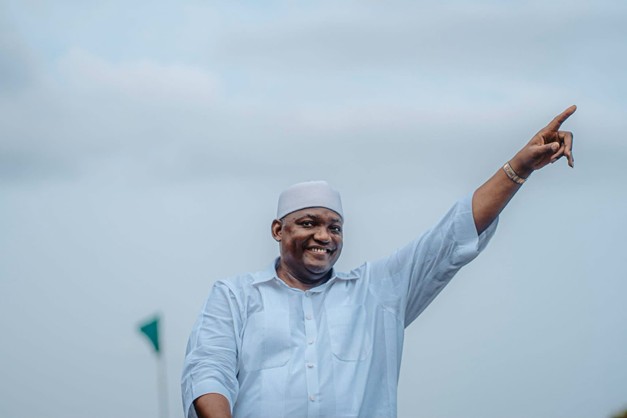
From democratic rebirth to national transformation: nine years of an ambition that crosses borders and shapes the future of all of Senegambia. There are presidents who pass through history. Others who try to leave their mark. And there are leaders whose actions force us to see their country's destiny differently. Since January 2017, His Excellency Mr. Adama Barrow, President of the Republic of Gambia, has embarked on a national transformation effort whose achievements, ambitions, and challenges today deserve attention far beyond Gambian borders.
Gambia is a small country in terms of area, but it holds a unique place in West African history and geography. In less than a decade, it has seen investments multiply in its roads, schools, healthcare infrastructure, electrical grid, and capabilities economics. At the heart of this evolution is a man whose political path is inseparable from a historical moment: Adama Barrow, who came to power after the 2016-2017 political transition. His stated ambition is clear: to make Gambia a modern, stable, connected state that can offer new opportunities to its youth.
2017: THE YEAR A NEW PAGE OPENED
When Adama Barrow assumed the presidency in January 2017, Gambia was coming out of more than two decades of authoritarian rule and a particularly delicate political transition. The priority was huge: consolidating peace, restoring trust, strengthening institutions, and putting the country on a path to sustainable development. Nine years later, his actions can be examined through a fundamental question: how to turn a democratic transition into tangible results for the population? The answer his administration supports is based on a Development strategy based on infrastructure, social services, economic modernization, and regional integration.
ROADS THAT CONNECT TERRITORIES AND CHANGE PEOPLE'S LIVES
In the report presented by the Gambian government, road infrastructure occupies a central place. According to official figures, more than 1,200 kilometers of roads have been built or rehabilitated since 2017, with an additional 375 kilometers expected by the end of 2026. These figures, provided by the authorities, illustrate the scale of the program underway. A road is not just asphalt. It opens a market to a farmer, makes it easier to transport a sick person to a hospital, brings a school closer to its students, and creates new opportunities for economic exchanges. The Senegambia Bridge is one of the major symbols of this new connectivity. By facilitating travel between the north and the south of Senegal through the territory In Gambia, this infrastructure embodies a fundamental reality: a country’s development can become a means of bringing different peoples closer together.
EDUCATION: BUILDING TOMORROW'S BIG AMBITIONS
No nation can sustainably transform its economy without investing in its children. With this in mind, the Barrow administration presents education as a strategic investment for future generations. According to the government, 424 schools have been built and about 6,400 additional classrooms have been created. Behind these infrastructures lies a key challenge: enabling children from both cities and rural areas to access better quality education. The development of secondary schools, technical training, and higher education opportunities also supports this goal.